Saturday, March 2, 2013

'March' and 'Oxford', the book, rerun to complete the Oxford story.   Edward Thomas's Birthday today, 3rd March.

Edward Thomas's 'Oxford', printed in 1903, saved the family from the 'gutter and bankruptcy.'

It was his first major commissioned work and came at a time when they were desperate for money after two years of living mainly from reviewing and single articles.

Words or pictures first? My copy, a rather expensive birthday present, privileged the John Fulleylove paintings above the text., and Edward Thomas was commissioned to accompany them.


Mine is the 'ordinary' edition, priced twenty shillings, and there was a limited Deluxe Edition, each copy numbered and signed by the artist, price two guineas.

There are sixty full-page illustrations, of which eleven are reproduced in Lucy Newlyn's 2005 reprint,Signal Books. (I have used her introduction for most of the information in this blog.)

Lucy writes that Fulleylove was an establishment Victorian painter, his trademark being historically important buildings painted with everyday, homely touches,'with a skilful choice of the unexpected as well as the typical aspects.' Hence a cat in a quad, people on bikes, figures coming round the corners of building.
As Edward Thomas was also drawn to the unpretentious and everday, the two works suited each other, though they are entirely independant.

Over a hundred years later the peopled pictures look very Edwardian and dated to my eyes. So many chaps in black gowns, a rarer sight these days, and how different from the French painters of the period, at least those we value most.
I prefer the views of Oxford without people - Magdalen tower for example,(actually that is quite Impressionistic), the view from South Hinksey and the little churchyard of St Peter in the East.
Saint Peter in the East

'It is sweet to enter that peacefullest and homeliest of churchyards, St Peter's in the East, overlooked by St Edmund Hall and Queen's College and the old city wall. There is a peace which only the thrush and blackbird break-'

The Text of 'Oxford'.


‘At sunset or dawn the city's place in the world, as a beautiful thing, is clearest. Few cities look other than sad at these hours; many, unless hid in their own smoke, look cheap. Oxford becomes part of the magic of sunset and dawn- is, as it were, gathered into the bosom of the power that is abroad. ‘


Oxford' is a strange book, peopled with semi-fictitious characters, half amalgamations of people he knew, half imaginary, and many reflecting himself as a visitor or undergraduate. It is not everyone's cup of tea, although there is a good deal of humour in it.


It’s acity with human influence of streets and architecture, the natural world everywhere intermingled with the buildings and the way the city 'steals out into the fields.' That is as important to him as well as the culture of books and librairies.


He seems to have enjoyed looking back, but the book is not a personal account at all. Oxford gave him time to read and learn and make some friends, but his was not a typical student life because of the separate, secret life he had with Helen throughout.
If you are interested in Oxford it's worth buying Lucy Newlyn's book.

The poem: March -

Edna Longley links this with Robert Frost's urging Edward Thomas to turn the prose of In Pursuit of Spring into poetry. 'March blends several March days and Thomas's perennial pursuit of spring into a quintessential symbol' Longley, The Annotated Collected Poems.
MARCH

Now I know that Spring will come again,
Perhaps to-morrow: however late I've patience
After this night following on such a day.

While still my temples ached from the cold burning
Of hail and wind, and still the primroses
Torn by the hail were covered up in it,
The sun filled earth and heaven with a great light
And a tenderness, almost warmth, where the hail dripped,
As if the mighty sun wept tears of joy.
But 'twas too late for warmth. The sunset piled
Mountains on mountains of snow and ice in the west:
Somewhere among their folds the wind was lost,
And yet 'twas cold, and though I knew that Spring
Would come again, I knew it had not come,
That it was lost too in those mountains chill.

What did the thrushes know? Rain, snow, sleet, hail,
Had kept them quiet as the primroses.
They had but an hour to sing. On boughs they sang,
On gates, on ground; they sang while they changed perches
And while they fought, if they remembered to fight:
So earnest were they to pack into that hour
Their unwilling hoard of song before the moon
Grew brighter than the clouds. Then 'twas no time
For singing merely. So they could keep off silence
And night, they cared not what they sang or screamed;
Whether 'twas hoarse or sweet or fierce or soft;
And to me all was sweet: they could do no wrong.
Something they knew--I also, while they sang
And after. Not till night had half its stars
And never a cloud, was I aware of silence
Stained with all that hour's songs, a silence
Saying that Spring returns, perhaps to-morrow.

Friday, March 1, 2013

'March' and 'Oxford', the book, rerun to complete the Oxford story.

Edward Thomas's 'Oxford', printed in 1903, saved the family from the 'gutter and bankruptcy.'

It was his first major commissioned work and came at a time when they were desperate for money after two years of living mainly from reviewing and single articles.

Words or pictures first? My copy, a rather expensive birthday present, privileged the John Fulleylove paintings above the text., and Edward Thomas was commissioned to accompany them.


Mine is the 'ordinary' edition, priced twenty shillings, and there was a limited Deluxe Edition, each copy numbered and signed by the artist, price two guineas.

There are sixty full-page illustrations, of which eleven are reproduced in Lucy Newlyn's 2005 reprint,Signal Books. (I have used her introduction for most of the information in this blog.)

Lucy writes that Fulleylove was an establishment Victorian painter, his trademark being historically important buildings painted with everyday, homely touches,'with a skilful choice of the unexpected as well as the typical aspects.' Hence a cat in a quad, people on bikes, figures coming round the corners of building.
As Edward Thomas was also drawn to the unpretentious and everday, the two works suited each other, though they are entirely independant.

Over a hundred years later the peopled pictures look very Edwardian and dated to my eyes. So many chaps in black gowns, a rarer sight these days, and how different from the French painters of the period, at least those we value most.
I prefer the views of Oxford without people - Magdalen tower for example,(actually that is quite Impressionistic), the view from South Hinksey and the little churchyard of St Peter in the East.
Saint Peter in the East

'It is sweet to enter that peacefullest and homeliest of churchyards, St Peter's in the East, overlooked by St Edmund Hall and Queen's College and the old city wall. There is a peace which only the thrush and blackbird break-'

The Text of 'Oxford'.


‘At sunset or dawn the city's place in the world, as a beautiful thing, is clearest. Few cities look other than sad at these hours; many, unless hid in their own smoke, look cheap. Oxford becomes part of the magic of sunset and dawn- is, as it were, gathered into the bosom of the power that is abroad. ‘


Oxford' is a strange book, peopled with semi-fictitious characters, half amalgamations of people he knew, half imaginary, and many reflecting himself as a visitor or undergraduate. It is not everyone's cup of tea, although there is a good deal of humour in it.


It’s acity with human influence of streets and architecture, the natural world everywhere intermingled with the buildings and the way the city 'steals out into the fields.' That is as important to him as well as the culture of books and librairies.


He seems to have enjoyed looking back, but the book is not a personal account at all. Oxford gave him time to read and learn and make some friends, but his was not a typical student life because of the separate, secret life he had with Helen throughout.
If you are interested in Oxford it's worth buying Lucy Newlyn's book.

The poem: March -

Edna Longley links this with Robert Frost's urging Edward Thomas to turn the prose of In Pursuit of Spring into poetry. 'March blends several March days and Thomas's perennial pursuit of spring into a quintessential symbol' Longley, The Annotated Collected Poems.
MARCH

Now I know that Spring will come again,
Perhaps to-morrow: however late I've patience
After this night following on such a day.

While still my temples ached from the cold burning
Of hail and wind, and still the primroses
Torn by the hail were covered up in it,
The sun filled earth and heaven with a great light
And a tenderness, almost warmth, where the hail dripped,
As if the mighty sun wept tears of joy.
But 'twas too late for warmth. The sunset piled
Mountains on mountains of snow and ice in the west:
Somewhere among their folds the wind was lost,
And yet 'twas cold, and though I knew that Spring
Would come again, I knew it had not come,
That it was lost too in those mountains chill.

What did the thrushes know? Rain, snow, sleet, hail,
Had kept them quiet as the primroses.
They had but an hour to sing. On boughs they sang,
On gates, on ground; they sang while they changed perches
And while they fought, if they remembered to fight:
So earnest were they to pack into that hour
Their unwilling hoard of song before the moon
Grew brighter than the clouds. Then 'twas no time
For singing merely. So they could keep off silence
And night, they cared not what they sang or screamed;
Whether 'twas hoarse or sweet or fierce or soft;
And to me all was sweet: they could do no wrong.
Something they knew--I also, while they sang
And after. Not till night had half its stars
And never a cloud, was I aware of silence
Stained with all that hour's songs, a silence
Saying that Spring returns, perhaps to-morrow.

Monday, February 25, 2013

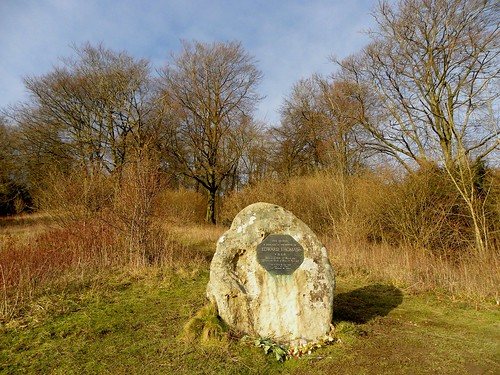
Edward Thomas's Birthday, the Fellowship Walk.


At Steep, 1914.

Each year, on the Sunday nearest to Edward Thomas's birthday (3rd March), the Fellowship organises a walk in the countryside near his home at Steep, near Petersfield in Hampshire. This event is the main annual gathering for Fellowship members.
There is time to contact the Fellowship membership secretary via the website, www.edwardthomasfellowship.org.uk if you would like to be part of it. I was asked by Richard Emeney, the chairman, to bring some volumes of 'A Conscious Englishman'along to sell over the lunch break, so I made a sheet of information to go with them.


A Conscious Englishman, by Margaret Keeping, published February 2013, £9.99.
£7.99 to Edward Thomas Fellowship members.
Did anyone ever begin to be a poet at thirty-six in the shade?Edward Thomas asks.

Following the outbreak of the First World War he does begin to write poetry after a lifetime of prose, and his self-doubt and melancholy starts to lift, helped by his close friendship with the American poet, Robert Frost.

This poignant novel tells the story of the last years of the poets life. Told from the point of view of both Edward and his loyal wife Helen, it shows his wrestling with words along with marriage, children, the perpetual lack of money, and eventually with his conscience.

Inspired by Edward and Helens writings, the novel is set against the beautifully evoked landscapes of Gloucestershire and Hampshire that offer the couple only partial peace.
'[Margaret Keeping's] writing is very assured and she has the necessary eye for place, detail, weather and seasons to write about Edward Thomas...I hope the book will reach the wide audience it deserves and feel sure that many others will enjoy it as much as I have.' Linda Newbery, Costa prize judge, author of Set in Stone.

'An absorbing book...This novel is very good on the influences behind the wonderful poetry.' Merryn Williams, The Oxford Times.

‘I've enjoyed reading the semi-fictional account of E.T.'s final years. I've been collecting Thomas's books since I was in the 6th form, and have almost a complete collection, and so I know a great deal about his life from the different biographies and collections of letters and memoirs.{On‘Dark earth/Light Sky’} Margaret Keeping's portrayal was more faithful and sensitive to the actual events. A Conscious Englishman' gains from the different narrative voices and perspectives, and includes many direct as well as oblique references to real events and to ET's writings. In particular the sections from Edward's consciousness are well-written and intelligently shaped.’Yorkshireman.
------------------------------------------------------------------------------
Poem: March the Third.

'As a birthday poem written shortly before Easter, March the Third subverts Christian celebration by making 'holy' and 'wild' interchangeable. A draft of lines 15-16 likens the birds' songs to canticles. Thomas was dissatisfied with the poem:"Perhaps I shall be able to mend March the Third. I know it must either be mended or ended." ' Edna Longley.

Here again (she said) is March the third
And twelve hours singing for the bird
'Twixt dawn and dusk, from half past six
To half past six, never unheard.

'Tis Sunday, and the church-bells end
When the birds do. I think they blend
Now better than they will when passed
Is this unnamed, unmarked godsend.

Or do all mark, and none dares say,
How it may shift and long delay,
Somewhere before the first of Spring,
But never fails, this singing day?

And when it falls on Sunday, bells
Are a wild natural voice that dwells
On hillsides; but the birds' songs have
The holiness gone from the bells.

This day unpromised is more dear
Than all the named days of the year
When seasonable sweets come in,
Because we know how lucky we are.
It's rather intriguing that the 3rd March, unnamed - he means in the Christian calendar - is the big day for Edward Thomas enthusiasts, pagans, Christians or nothing at all!

Saturday, February 23, 2013

Edward Thomas and Oxford

It's been suggested that I repeat early pages relating to settings in Thomas's earlier life.

As I live in Oxford and have lived in or around the city since the mid-sixties it is important to me and I believe it was important to Edward Thomas, but he did not have a care-free time at University. He left school at just seventeen, his father insisting that he studied at home for Civil service entrance, but instead he set off to walk from London to Swindon, taking notes for the book that became A Woodland Life. He'd already had a dozen articles published in national journals and was earning money from them; this gave him courage to stand up to his father and the Civil service idea was dropped - instead he was to apply to Oxford.

He had been encouraged in his writing by James Noble, writer and critic and father of Helen. Helen and Edward fell in love, and on her twentieth birthday became lovers. Biographers agree that for young people of their class this was not usual - some query Helen's motives, I think she was a very passionate person.

In the autumn of 1897 he went up to Oxford to work for a scholarship while living in lodgings at 113 Cowley Road, as a non-collegiate student.


Graffiti shops, Cowley Road, by Jane Hope, www.janehope.co.uk

If you're not familiar with it, today Cowley Road qualifies for the word 'vibrant' - restaurants, bars, shops of every ethnicity, a live music venue, small independant cinema, a well-known early health-food shop, Uhuru, very trendy community market - so much I can't begin to describe it.
East Oxford overall is also becoming the creative heart of Oxford, especially though not entirely, for younger artists and writers.What it's not known for is its architecture or for more established literary connections (Gerard Manley Hopkins referred to East Oxford as Oxford's 'base and brickish skirt'.)
Not like North Oxford which is peppered with blue plaques.

I would very much like to see the house, 113, marked in some way. A young stone-mason, Richard Morely, happened to be living there, and we talked about the possibility of doing something, with the help of the Edward Thomas Fellowship. (Richard remains in Oxford and can be contacted for commissions - morleymasonry@hotmail.com)
The wording was agreed and a design made, but it is on hold at the moment.


Oxford 'Entrance'

The non-collegiate scheme was not unlike the set-up in which I took my B.Ed, and Edward was not going to be satisfied with it. He had to pass exams in Greek, Latin and logic with Mathematics, and failed three times to pass what was in effect the Oxford entrance exam. He went to lectures in the morning, walked in the afternoon, worked for the rest of the time.

Edward wrote very loving letters to Helen almost daily,

'I am very happy with you, very content, and very hopeful.... you alone are beautiful. I can often doubt whether what I see is beautiful; but I know....{unfinished}
He took long walks into the country - 'Late flights of larks were singing and darting about in the last gardens of the town and the first fields of the country.' -,wrote 'verses' and wanted her opinion, asking if she thought them ludicrous. He treated her as an intellectual equal at that time, suggesting reading they could discuss later.
Many letters are sexually charged, and one refers to the rights and wrong of 'preventatives' - contraception. In others Edward is distinguishing lust from love, saying that love lasts and also allows room for other things, whereas lust is obsessional and allows room for nothing else.

As always though, he worked hard and eventually won the history scholarship he needed to go to Oxford 'proper', to Lincoln College to read history.

There was of course no such thing as 'English literature' in conservative Oxford; it carried an association of dissent and belonged in Liverpool and London. But it's clear that Edward spent a good deal of his time reading literature, for pleasure and because he was still selling his articles to journals.


The Turl
From The Word, (which goes on to concern something quite different from the formal learning at its beginning):


From THE WORD.
There are so many things I have forgot,
That once were much to me, or that were not,
All lost, as is a childless woman's child
And its child's children, in the undefiled
Abyss of what can never come again.
I have forgot, too, names of mighty men
That fought and lost or won in the old wars,
Of kings and fiends and gods, and most of the stars.
Some things I have forgot that I forget.


And here is part of a poem from Branchlines, Edward Thomas and Contemporary Poetry, edited by Guy Cuthbertson and Lucy Newlyn, in which fifty-three of today's poets respond to him in their own work.

This is Robert Crawford on a sense of his presence in Oxford still; Guy, his former student, is the man the poet met by chance, and certainly for me 'Your man, Edward Thomas,' is exactly right. That is Guy, and an ever-helpful guide and clue-dropper to me.

The second stanza is about the collection of letters between Edward and Robert Frost, 'Elected Friends', edited by Matthew Spencer.

E.T.

'somehow someday I shall be here again'
When we met by chance on the Turl, were you aware
Yon door opposite was exactly the dark door where
Your man, Edward Thomas, before he became a poet,
Nipped out of the world and into Lincoln College?
Odd we met and spoke about him there.


Odd, too, in St Louis, seeing in the Left Bank bookstore
That book of his to-and-fro with Robert Frost.
I bought it on impulse - his finest writing
So lightly right I can't get away from him,
Though all the time I know he isn't there.


Any comments about the plaque idea would be very welcome.

Wednesday, February 20, 2013

Settings:Arras, Beaurains and Agny, Northern France

Arras town square with a band playing. The ruined houses are as Edward Thomas described them in his war diary, the notebook he kept during the ten weeks he had in France.

The diary was discovered by the late Edward Cawston Thomas among his father, Merfyn's papers and painstakingly transcribed. It was very hard for Edward to transcribe, being written in small handwriting in a pocket-sized notebook, but you can try too, as it can be seen on the First World War digitalised Archive, University of Oxford. Professor George Thomas worked from a magnified version and I read it from his Collected Poems Annex..

The note-book was exhibited at the Imperial War Museum, in 2004 I think, all creased by the shell-blast that killed Edward Thomas.

Here he is on Arras: 'Afternoon to Arras.-Town Hall like Carreg Cennin. Beautiful small white square empty. Top story of high house ruined cloth armchair and a garment across it left as fly shell arrived. ... To Arras and began showing sectors and arcs on 1/10000 maps. ...Place Victor Hugo white houses ans shutters and sharpened fuller and dome in middle. Beautiful.'

Much of Thomas's time was spent with his battalion in the village of Beaurains, or what was left of it. It was absolutely devastated by the war. Here is a picture from 1916


To write the First World War scenes I relied almost entirely on Thomas's War Diary, though the Imperial War Museum artefacts and 'trenches' lent detail and atmosphere. I did not try to convey the broader reality of the War,which has been done so well by so many - I stayed with Thomas's recording of what he saw.
It's impossible not to believe that he would, as he always did, have used his notes for poems to be written:
Enemy plane like pale moth beautiful among shrapnel bursts.

A still starry night with only machine guns and rifles.

Sods on dug-out fledged with fine fronds of yarrow.

Hare, partridges and wild duck in field S.E. of guns. The shelling must have slaughtered many jackdaws

but has made homes for many more.

Blackbirds sing at battery.

Agny, in a small cemetery, is where he is buried.


Edward Thomas wrote no poems in France as far as we know. Just two lines which reflect an earlier poem, 'Roads'.

'Where any turn may lead to Heaven
Or any corner may hide Hell
Roads shining like river up hill after rain.'

Friday, February 15, 2013

Leaving High Beech; Edward Thomas and Robert Frost on Snow.
copyright Keith Talbot


Out in The Dark.

I am citing from 'First Known When Lost', the remarkable blog of Stephen Peltz, a retired attorney in the States, quite the most erudite, encyclopaedic man you could imagine. His illustrations, too, are marvels of imaginative thinking and seeking.

"Out In The Dark Over The Snow": Edward Thomas And Robert Frost

Robert Frost's "Desert Places" and "Stopping by Woods on a Snowy Evening" put me in mind of a poem by Edward Thomas. Thomas's poem in turn reminds me of the affinity between Thomas and Frost. For both of them, the darkness (of a forest or of night or of interstellar space) is frightening as well as alluring: "The woods are lovely, dark and deep" (Frost); "Dark is the forest and deep, and overhead/Hang stars like seeds of light/In vain" (Thomas); "They cannot scare me with their empty spaces/Between stars" (Frost). (And consider also Frost's "Acquainted with the Night" and "An Old Man's Winter Night".)"

Thomas wrote the first draft of the following poem on Christmas Eve of 1916 while he was on leave with his family at High Beech in Essex.

Out in the Dark

Out in the dark over the snow
The fallow fawns invisible go
With the fallow doe;
And the winds blow
Fast as the stars are slow.

Stealthily the dark haunts round
And, when a lamp goes, without sound
At a swifter bound
Than the swiftest hound,
Arrives, and all else is drowned;

And star and I and wind and deer
Are in the dark together, -- near,
Yet far, -- and fear
Drums on my ear
In that sage company drear.

How weak and little is the light,
All the universe of sight,
Love and delight,
Before the might,
If you love it not, of night.
--------------------------------------------


I can't print out Frost's 'Stopping By Woods on a Snowy Evening', but much better than that, you can hear him read it - just put the title, his name +Youtube and there it will be.


A Conscious Englishman
Here are two extracts from 'Helen's' voice in the novel:

'Still Edward liked the little house, the deer, the starlight, lamplight on the trees by the window. He liked the way darkness rushed in when the lamp was turned out. He would walk into the deepest, darkest part of the forest and come home very late. No white pebbles for him. This was habitual with him. It seemed as though he chose to lose himself whenever he found a forest that would serve. But I was afraid of what he was thinking while he walked alone so long.'
and
'The day passed happily. As soon as tea was over I went out and lit the coloured candles on the Christmas tree, then Edward carried it in from where Merfyn had hidden it in the woodshed. Myfanwy was entranced. She’d never seen a Christmas tree before.

After tea we sat near the fire, eating nuts and talking or reading our new books. Then Edward took Baba on his knee and sang Welsh songs and some rousing army ones.

It was just before her bedtime that I watched the two of them, Baba on a chair by the window, looking out at the snow and Edward behind her looking out too. They were hoping to see deer.

‘Shall we see any? Are they out there?’she asked. I remember that she wondered if they were cold and frightened, out in the dark, not like her, safe in the cosy sitting room, with the lamp lit and her father’s hand on her shoulder. That was when I wept.'
I wrote the last because Edward, sending the poem to Eleanor Farjeon, commented, 'It is really Baba who speaks, not I. Something she felt put me on to it.' Myfanwy had been nervous of going into the sitting room to watch for deer because it was dark but was able to when her father stood with her. It was almost the last time she would have his protection.
*
(For a very weird experience, you may or may not like this: 'poetry reincarnations' on Youtube, animated 'readings by' Edward Thomas, Eleanor Farjeon and no doubt countless others - Shakespeare, Wordsworth perhaps? No, but there is Machiavelli, Jane Austen, Gerard Manley Hopkins and Emily Dickinson. Some do have the real soundtrack of the author's voice.
I quite like the Eleanor one though I know the voice is wrong, too low. But 'Edward' reading Adlestrop and The Gallows - just too bizarre, though I suspect the voice is probably close. Comments?)
-------------------------------------------------------------------------------------------------
Publishing matters
Frank has been contacting librairies and bookshops. He has put the Sunday broadcast on his Streetbooks site - only a couple of minutes relate to the book specifically.
We were both pleased to see the review in the Oxford Times - it's attached to the previous blog.I grumbled a bit about the word 'recycled' which suggests 'cut and paste' and it most certainly was not. And I was sorry not to see the cover ...but it's no use quibbling, and I'm very pleased to see it especially as the last full-scale review was of 'The Real Jane Austen' by Paula Byrne. She was awarded 4 stars so I'm happy with my 3.


Wednesday, February 13, 2013

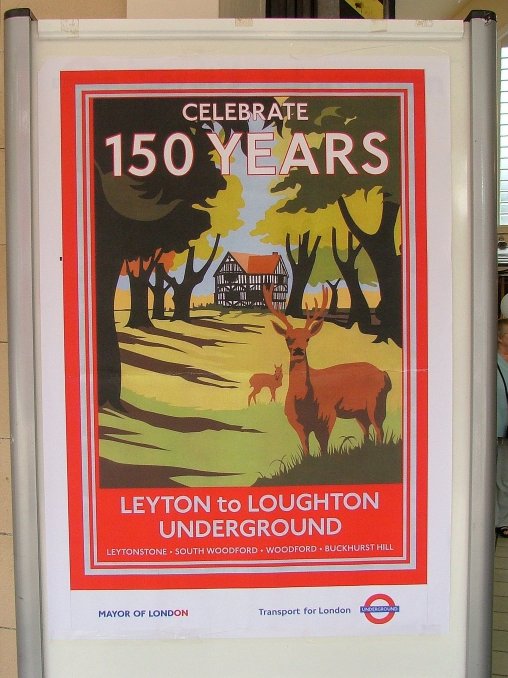
Settings, High Beech, Epping Forest and Loughton


The Thomases left Steep, but Steep has never forgotten the Thomases. Edward's name is on the war memorial there, not here.

The old nurseryman' s cottage at High Beech (now Beach) was Edward's home very briefly:from November 1916 to early January 1915. And for most of that he was away in Army Camp at Romford and later Trowbridge. Helen stayed on only a very short time after his death.
They moved for several reasons: to be nearer to London, for family and Merfyn's apprenticeship, and also because of some disappointment with Steep.
A third reason - being closer for Edward to come on leave - had no meaning given the decision he was about to make, of volunteering to go abroad. Possibly Edward thought it would be better for Helen to be nearer London, her sister and Eleanor, should the worst happen

The cottage where they lived is no longer there, but this is the area, on the western side of Epping Forest.

Paul's Nursery Road:


An extract from 'Helen's'
Half a kiss, half a tear.

'In October we moved to High Beech, a part of Epping Forest – Edward found the house for us. He had been there briefly on a training camp and liked the open commons and miles of ancient forest. It was convenient for London, for Walthamstow where Merfyn was working, and we heard that quite a colony of artists and writers was beginning to live in the area.

Ours was the abandoned cottage of a nurseryman who was away at the front, so we had good well-tilled soil, and a hen-run, important because of the shortages – I managed to buy some Leghorn pullets. In late September, with the beech leaves turning russet and the sun still slanting warmly through the trees it looked quite hospitable. Silver birches, always a favourite of mine, swayed delicately together at the end of the garden. Edward and I put up wire-netting to protect the vegetables against rabbits.

He took Bronwen and Baba walking in the forest, showing them the strange old trees once pollarded for firewood and grown into curious shapes. They found secret ponds, places where we might go to catch a glimpse of fallow deer coming to drink. Bronnie, who was such an expert on wild flowers, would have to learn about mushrooms and toadstools. Edward showed the girls how to leave a trail of white pebbles as they went, like Hansel and Gretel, so that they would not be lost.

This was somewhere perhaps for us to make a new start after the war, close to many of our friends and to London, but still as rural as we could wish. Merfyn could bicycle to his work; he was earning fifteen shillings a week so we were better off in that way. Bronnie would have to go a cheaper school in Loughton, the Girls’ High School, though for a time she’d stay on with my sister Mary and her cousin Margaret.

Edward was on his Officer training in Wiltshire – so near to Steep! It was a long slow train journey for him to come to us. I longed for him to be with us, there on the edge of the forest. We were like woodcutters in a fairy tale, our only neighbours deer and badgers. Myfanwy would have no playmates and before long I would have to find her a school. I was doing my best, making the most of things.

But by November, with the dark coming early, I felt differently about the house and the Forest. The lovely canopy of summer and autumn had turned to nothing but a brown muddy mulch underfoot. It rained and rained, the house was cold and the dreadful little paraffin stove instead of a proper range was a great nuisance.

Still Edward liked the little house, the deer, the starlight, lamplight on the trees by the window. He liked the way darkness rushed in when the lamp was turned out. He would walk into the deepest, darkest part of the forest and come home very late. No white pebbles for him. This was habitual with him. It seemed as though he chose to lose himself whenever he found a forest that would serve. But I was afraid of what he was thinking while he walked alone so long.'
Loughton station features in my novel as the end, essentially, of the Thomas's life as a complete family, and the location of Eleanor Farjeon's last sighting of Edward.
Loughton has had three stations and I can't find a picture of the second, the one they would have used. The first was built in 1856, replaced only nine years later. Then in 1940 that was demolished and replaced by a rather striking building, now Grade II Listed.

In Loughton too is the Lopping Hall, built to compensate the inhabitants for losing their ancient rights to cut firewood when the Forest was taken over by the Forestry Commission.


Pollarded trees grown old.

The Poem: The Dark Forest
Thomas was wary of using 'a too obvious metaphor' and 'entirely conscious symbolism' and had some anxiety about the poem. Edna Longley comments that 'one context may be the increasing 'multitudes' of war dead.
She prints a discarded last stanza from the second draft, which I have added after the asterisk. What do we make of it, I wonder - comments most welcome.

Dark is the forest and deep, and overhead
Hang stars like seeds of light
In vain, though not since they were sown was bred
Anything more bright.

And evermore mighty multitudes ride
About, nor enter in;
Of the other multitudes that dwell inside
Never yet was one seen.

The forest foxglove is purple, the marguerite
Outside is gold and white,
Nor can those that pluck either blossom greet
The others, day or night.
*
Not even beloved and lover or child and mother,
One from within, one from
Without the forest could recognise each other,
Since they have changed their home.
------------------------------------------------------------------------------------------------------------------
Publishing: I have a review in the Times - the Oxford Times, that is!